
Custom ESD ABS Sheet vs. Standard ABS Sheet: Which Delivers Better Protection for Semiconductor Packaging?
Oct 14, 2026
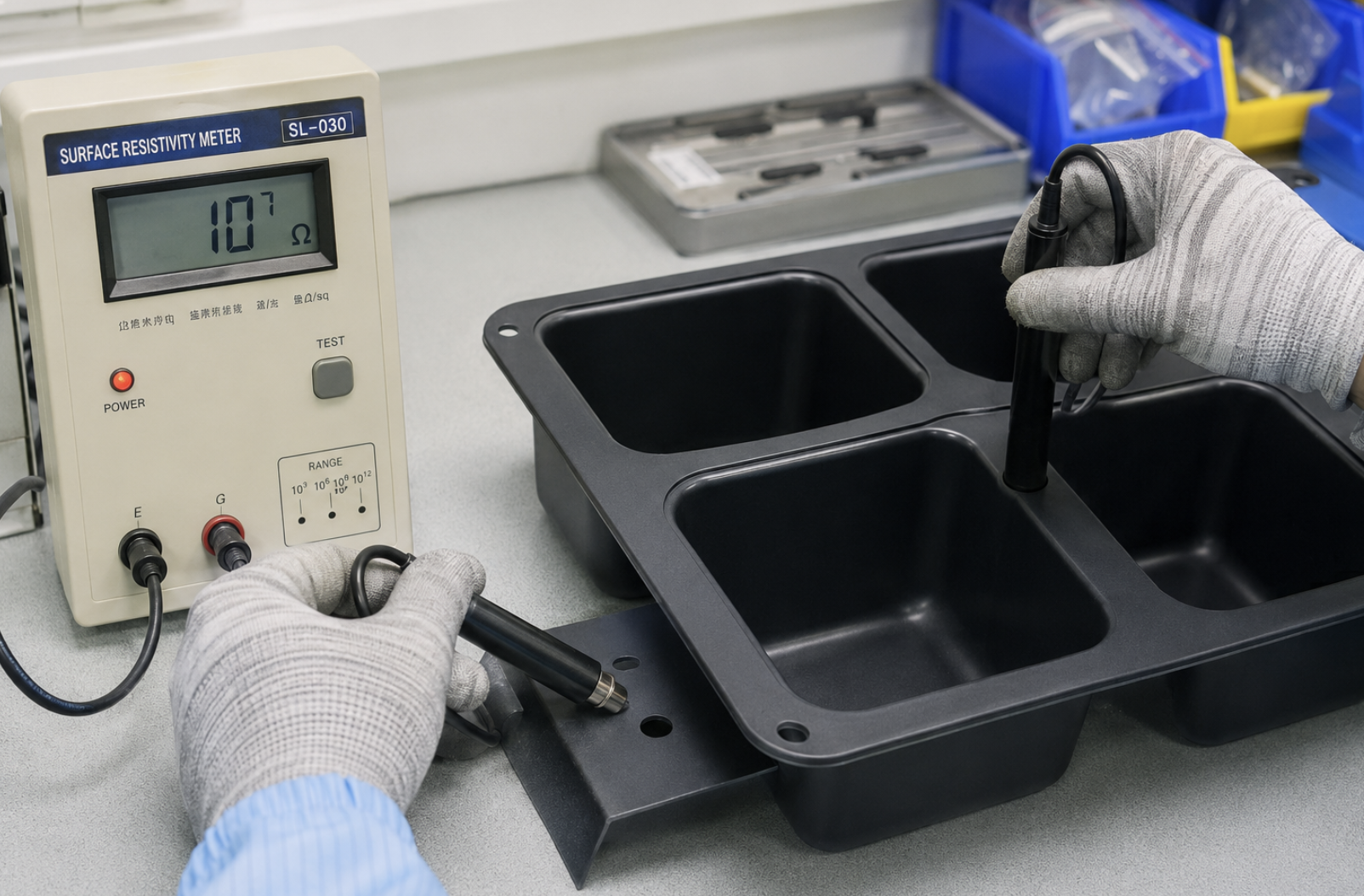
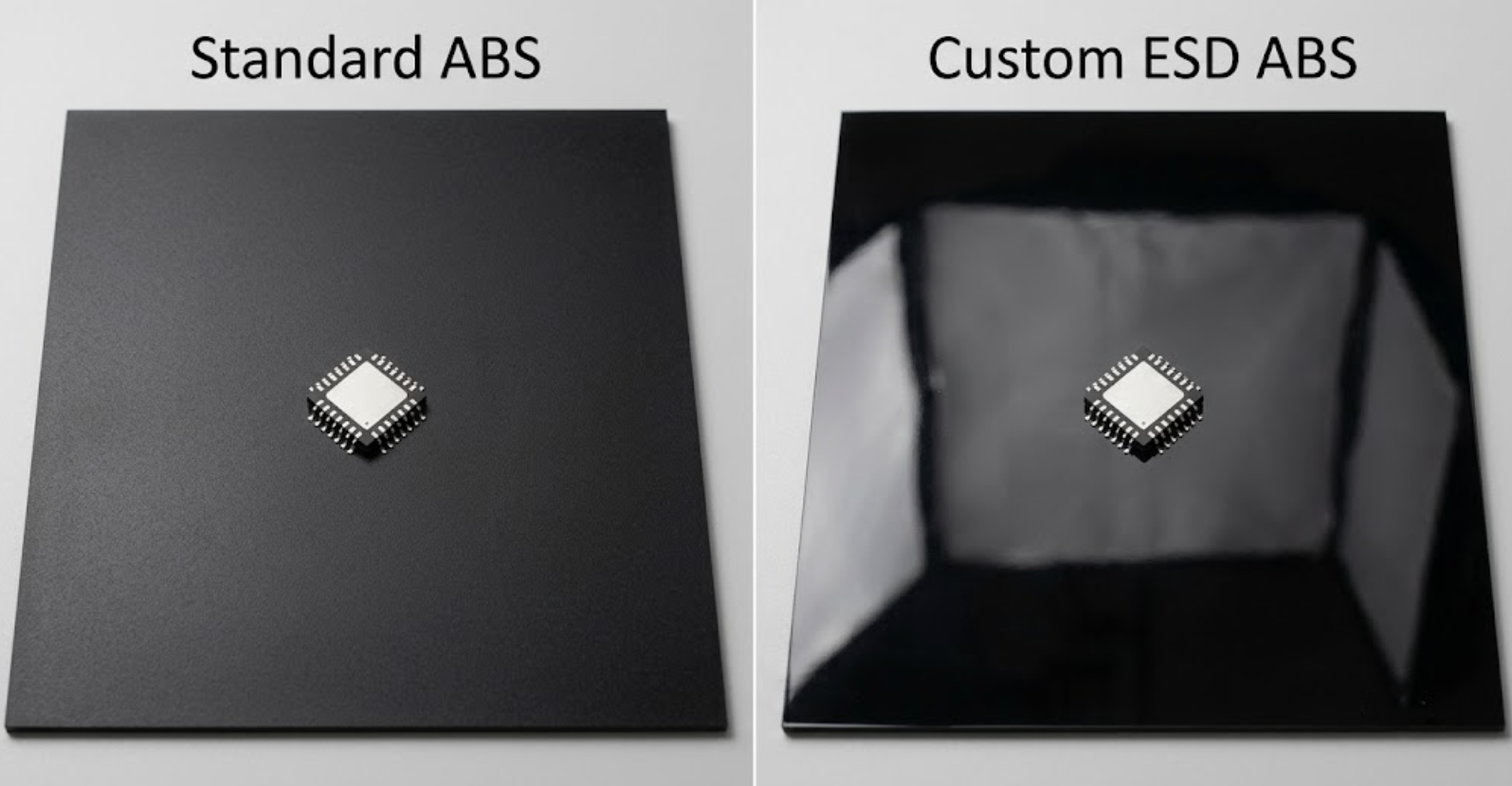
Xiamen, Fujian Oct 14, 2026 (Issuewire.com) - Modern semiconductor technology operates on an unprecedented scale. As circuit nodes shrink to the nanometer level, integrated circuits (ICs) become exponentially more vulnerable to electrostatic discharge (ESD) events. Even a minor discharge of less than 100 volts can cause catastrophic failure in these delicate microchips. Consequently, the materials utilized for transport trays, wafer carriers, and component housing play a critical role in manufacturing reliability. Engineering teams often debate the necessity of specialized protective materials versus standard polymers. Industry data suggests that the shift toward Custom ESD ABS Sheet (https://www.fullstarxm.com/high-glossy-black-esd-abs-plastic-sheets-for-vacuum-forming_p278.html) has transitioned from a luxury to a baseline requirement for high-yield semiconductor packaging. This analysis evaluates the technical divergence between standard Acrylonitrile Butadiene Styrene (ABS) and engineered conductive variants, focusing on how these material choices influence long-term device safety. Q1: How do surface resistivity and charge decay kinetics differ between standard ABS and custom ESD ABS sheets? The primary distinction between standard and conductive polymers lies in their electrical behavior. Standard ABS functions as a high-grade electrical insulator, with surface resistivity typically exceeding 10^12 ohms per square. While this insulating property prevents external current from entering, it creates a dangerous environment for static-sensitive components. Friction during handling generates triboelectric charges, which accumulate on the surface of the insulating ABS. Because the material inhibits charge movement, these trapped electrons remain until an object, such as a circuit board or a human finger, provides a path to ground. This sudden release of stored energy results in an ESD event that can destroy micro-circuits. In contrast, custom ESD ABS sheets incorporate conductive fillers, typically carbon black, to create a stable internal network. This modification lowers the surface resistivity to a range between 10^6 and 10^9 ohms per square. This range provides the perfect balance for static control; it allows the material to dissipate charges safely to the ground without inducing a short circuit. Furthermore, charge decay kinetics demonstrate this superior control. While standard ABS retains static charges for extended periods, ESD-grade materials can dissipate a 5,000-volt charge to near zero in less than two seconds. This rapid decay rate eliminates the build-up of static electricity, effectively shielding semiconductor chips from potential dielectric breakdown. Q2: What happens to the protective barrier during heavy thermoforming? Comparing thickness distribution and impedance stability. Thermoforming remains the most common process for creating complex semiconductor carriers. However, this process introduces significant material stress. When manufacturers pull a heated sheet of plastic into a deep mold, the material stretches and thins in specific areas. Standard ABS generally maintains its resistivity during this thinning process because its insulating properties depend on the base polymer chain, not an additive network. Conversely, ESD-grade materials face a complex engineering challenge during thermoforming. If the conductive network breaks during the stretching phase, the material develops "hot spots" where resistivity spikes significantly, rendering the tray ineffective. Therefore, the dispersion quality of the conductive filler determines the success of the part. High-performance manufacturing utilizes sophisticated compounding techniques to ensure that the conductive pathways remain interconnected even after the material stretches to 300% of its original size. Xiamen Fullstar Imp.&Exp.Trading Co.,Ltd. addresses this challenge by employing high-dispersion carbon black technology. This approach ensures that the impedance remains uniform across the entire surface of the tray, regardless of the draw ratio. When engineers compare the cross-sectional resistivity of a deep-draw tray, custom materials consistently outperform standard variants by maintaining stable electrical characteristics. This stability prevents the unpredictable failures often associated with lower-quality wholesale ESD plastic black ABS sheets (https://www.fullstarxm.com/wholesale-esd-plastic-black-abs-sheets-factory-price-for-thermoforming_p281.html), where the conductive network might be too sparse to survive the mechanical stress of molding. Q3: Beyond conductive fillers, how does an ABS/TPU composite structure further improve protection during deep-draw forming? Conductive filler dispersion is not the only variable that determines whether a tray survives deep-draw thermoforming intact. The base substrate itself plays an equally important role. Standard single-layer ESD ABS, while electrically effective, can develop micro-cracks at sharp cavity corners and fold lines when stretched into complex geometries -- a common failure point in wafer carriers and multi-cavity component trays. To address this, advanced manufacturers laminate the conductive ABS layer with a thin TPU (thermoplastic polyurethane) layer, creating a composite sheet that retains the rigidity and dimensional stability required for structural support, while gaining the flexibility and elasticity of TPU at stress points. This ABS/TPU construction absorbs mechanical shock during handling and reduces the risk of cracking or delamination at deep-draw corners, extending tray service life across repeated use-and-return cycles common in semiconductor logistics. The composite structure also broadens the application scope beyond rigid single-material trays. Because the TPU layer adds cushioning without sacrificing the ESD-safe surface resistivity of the ABS layer, the same sheet can be thermoformed into deeper, more intricate cavity designs -- including matrix trays, connector carriers, and buffer liners for irregularly shaped components -- without compromising static control. Fullstar's ABS/TPU composite sheets are engineered specifically for this dual requirement, supporting gauge thicknesses from 0.3mm to 3.0mm and widths up to 950mm, while remaining fully recyclable to support customers' sustainability targets. Q4: Why do particulate contamination and "carbon sloughing" make standard materials obsolete in cleanroom environments? The semiconductor industry maintains rigorous cleanroom standards, often requiring Class 10 or Class 100 environments. In these controlled spaces, even a microscopic dust particle can bridge an electrical contact and ruin a silicon wafer. This reality highlights the second major flaw of standard insulating ABS: its tendency to attract dust. Because standard ABS effectively acts as a static magnet, it pulls airborne particulates toward its surface through electrostatic attraction. Once contaminated, these trays introduce foreign debris into the packaging cycle, creating a hidden hazard that is difficult to trace. However, the industry faces an equally dangerous problem with poorly manufactured ESD materials: carbon sloughing. If the conductive fillers are not properly encapsulated within the ABS matrix, they can break off the surface as fine dust. This phenomenon effectively replaces static electricity with physical contamination. In high-stakes manufacturing, conductive carbon dust is equally as dangerous as static, as it can cause electrical shorts on sensitive chip leads. Addressing this problem requires precision manufacturing. Fullstar utilizes a proprietary alloy formulation that locks conductive particles securely within the polymer structure. This specialized manufacturing ensures that the high-glossy, black surface remains smooth and non-shedding. By achieving this balance, the material provides the necessary electrical dissipation without compromising the physical purity required by cleanroom standards. Objective comparison shows that modern, custom-formulated ABS sheets eliminate the particulate shedding that plagued early versions of conductive plastics. Q5: From customized dimensions to rapid sampling, how does manufacturing adaptability impact global B2B procurement risk? Selecting an appropriate material is only the first step in the procurement process. Global supply chain managers must also evaluate the technical adaptability of the manufacturing partner. The semiconductor industry moves with rapid speed, requiring packaging that fits exact specifications for wafer size, component height, and magazine alignment. A supplier that can only offer standard, off-the-shelf sheets often forces procurement managers to compromise on their design efficiency. Manufacturing adaptability involves several dimensions, including the ability to control gauge thickness from as thin as 0.2mm to as thick as 3.0mm, and the capacity to provide precise width cuts. Fullstar (https://www.fullstarxm.com/about-us_d1) (Xiamen Fullstar Imp.&Exp.Trading Co.,Ltd.) mitigates these risks by integrating comprehensive production capabilities. With three specialized production bases and multi-line co-extrusion technology, the company manages both large-scale production and rapid, small-batch prototyping. By bridging the gap between raw material science and custom thermoforming requirements, the manufacturer reduces the time-to-market for new semiconductor products. Objective evaluation of the supply chain shows that factories capable of providing detailed technical certifications, such as surface resistivity logs and thickness reports, offer superior value. Procurement teams that opt for such partners avoid the common pitfalls of inconsistent material quality and unpredictable shipping timelines. Typical Applications of Custom ESD ABS / ABS-TPU Composite Sheets Wafer carrier trays and IC matrix trays for semiconductor fabs PCB / PCBA transport and storage trays for SMT production lines Deep-draw blister trays for connectors, sensors, and precision components Anti-scratch, dust-free protective liners for cleanroom electronic assembly Buffer packaging and industrial protective liners for irregular or fragile parts Export and logistics packaging for static-sensitive electronic modules Conclusion: Strategic Takeaway and the Future of Semiconductor Packaging The evidence clearly favors custom ESD ABS sheets for modern semiconductor packaging applications. While standard ABS serves a purpose in non-sensitive environments, it fails to provide the critical electrical control necessary for today's high-density microchips. By choosing custom-engineered conductive materials, manufacturers ensure a reliable, stable, and clean environment that directly preserves the value of their components. This selection reduces latent defect rates, simplifies cleanroom maintenance, and optimizes the structural reliability of the entire packaging system. For engineering and procurement teams tasked with securing the next generation of semiconductor electronics, a deliberate focus on high-performance material selection is essential. Learn more about professional ESD material solutions at https://www.fullstarxm.com/.
Source :Xiamen Fullstar Imp.&Exp.Trading Co.,Ltd.
This article was originally published by IssueWire. Read the original article here.
YOUR NEWS, OUR NETWORK.
Do you have Great News you want to tell the world?
Be it updates about your business or your community, you can make sure that it’s heard by submitting your story to our network reaching hundreds of news sites across 6 verticals.
More News
![aritcles[0].caption](https://i.dailymail.com/1s/2026/10/16/15/111905013-0-image-a-4_1792159332495.jpg)
Tourist files $800k lawsuit against Salem's famous 'Witch House' over claims she fell down 'uneven' 17th Century wooden steps and broke her arm
The woman said the fall caused her major injuries, including a broken humerus and a dislocated left shoulder.

Secret Service deputy director suddenly quits after series of security blunders as Trump threats escalate
The Secret Service is struggling to respond to an increasingly complex threat landscape - and threats against President Donald Trump.

Katie Zacharia is out as Trump's White House press secretary after disastrous first week on the job
Katie Zacharia has been fired from her role as White House press secretary after less than five days on the job.

School shooting victims were all in special education classroom when teen gunman opened fire: Live updates
A teenage gunman stormed Silver Rail Elementary School on Thursday and killed three students and a teacher before he was shot dead by a person who followed him inside.

Zelensky smirks when asked about Trump's looming midterm disaster after bitter falling out over 'betrayal' and refinery strikes
Volodymyr Zelensky triggered an audience to break out in laughter when he gave an unexpected answer to a question about Donald Trump.

City Controller subpoenas financial records from '28 Olympic organizers
L.A. City Controller Kenneth Mejia said Olympic organizer LA28 must release more bank records and other information. His subpoena escalates a fight with the 2028 Olympic group.

Youngest victim of Oregon elementary school shooting that killed four named as Rhoam Summer, five, as dad says: 'Today has been the worst day of my life'
Rhoam Summer, 5, was identified by locals and by his father as being one of the youngsters who was murdered inside Silver Rail Elementary School in Bend on Thursday.

New White House press secretary frontrunner Scott Jennings breaks silence on Katie Zacharia's record-breaking firing
Scott Jennings, considered a frontrunner to be the next White House press secretary, was on-air Friday and broke the news to his radio audience that Katie Zacharia's tenure appeared to be finished.

Oregon school shooter Griffin John II, 16, deliberately targeted his old special needs classroom massacre that killed four
Griffin John II, 16, killed three children aged five, eight, and 11, and their 25-year-old teacher at Silver Rail Elementary School in Bend, Oregon, on Thursday afternoon.

Jeffrey Donaldson was so confident he had conned the jury he believed he would walk free - now we reveal the new life he had planned for himself and his wife Eleanor in Africa
Nineteen kilometres from Jeffrey Donaldson's prison cell, down a quiet hedge-lined road, a For Sale sign stands outside a tidy country house. It was his home for 22 years.

'Very comfortable' leather Clarks boots that go with any winter outfit reduced by £20
"I absolutely love these boots, these are my go- to. I have just purchased my third pair"

Serial killer Rose West 'on her last legs' and 'rotting away in prison' as health declines
Rose West, the depraved serial killer who helped her husband Fred murder at least nine people, is believed to be on her last legs as her health declines dramatically at HMP New Hall.